Zirconia Crowns in Turkey (2026): Real Cost, Clinical Standards and Full-Mouth Packages
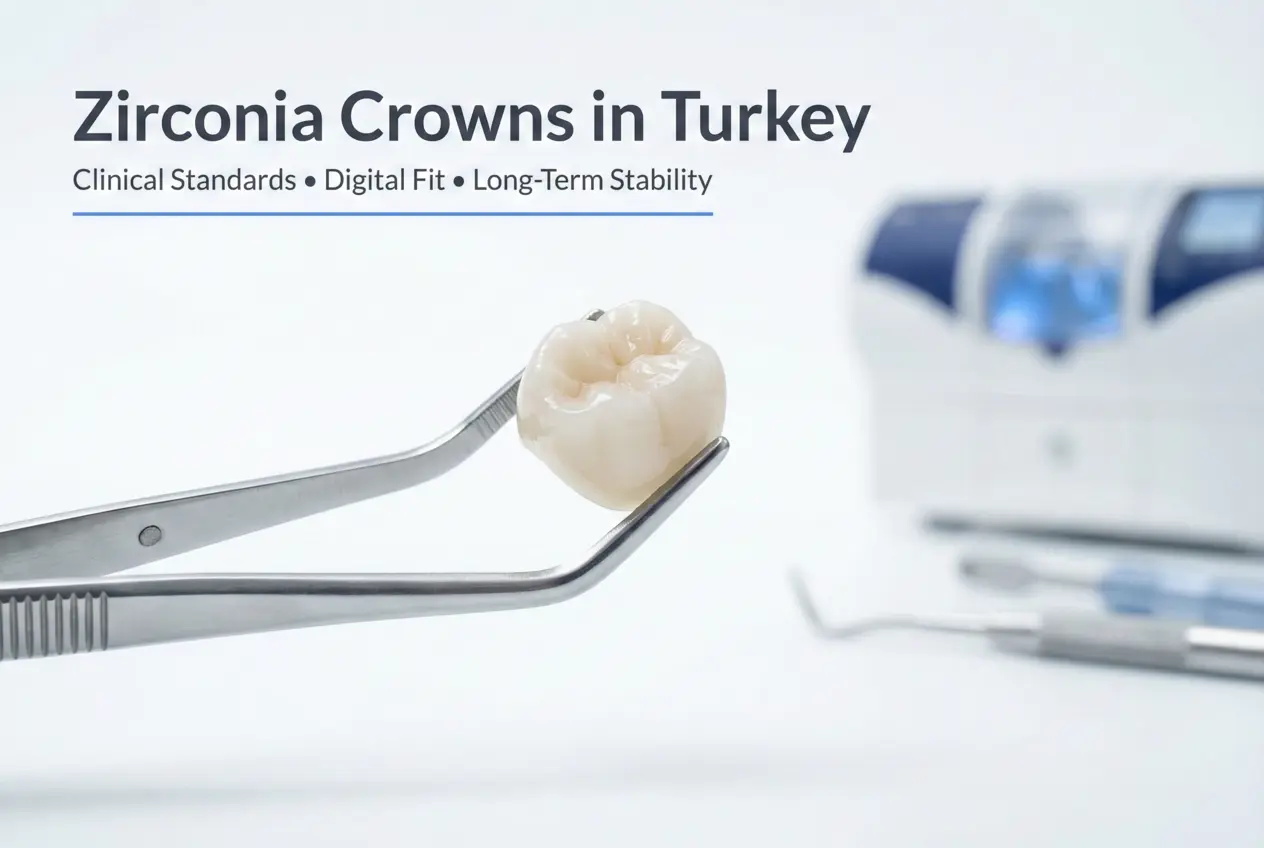
Zirconia crowns in Turkey start from €195 per tooth in 2026, with all-inclusive full-mouth packages from €3,560. Zirconia is a metal-free, biocompatible ceramic crown that fully covers a damaged tooth. Therefore, it is the right choice for root canal treated, cracked, heavily filled or severely discoloured teeth. At IST Smile Experts in Istanbul, every case is confirmed clinically before any irreversible preparation, so you only receive crowns when they are medically justified.
Zirconia Crowns Turkey: Key Facts (2026)
- Starting priceFrom €195 per tooth
- Full-mouth packages€3,560 to €5,960, all inclusive
- MaterialMulti-layer zirconia, 1,000+ MPa, metal-free
- Lifespan15 to 20 years with proper care
- Time in Istanbul3 to 5 clinic days, one trip
- Warranty10-year written international guarantee
What zirconia crowns are, and what they are not
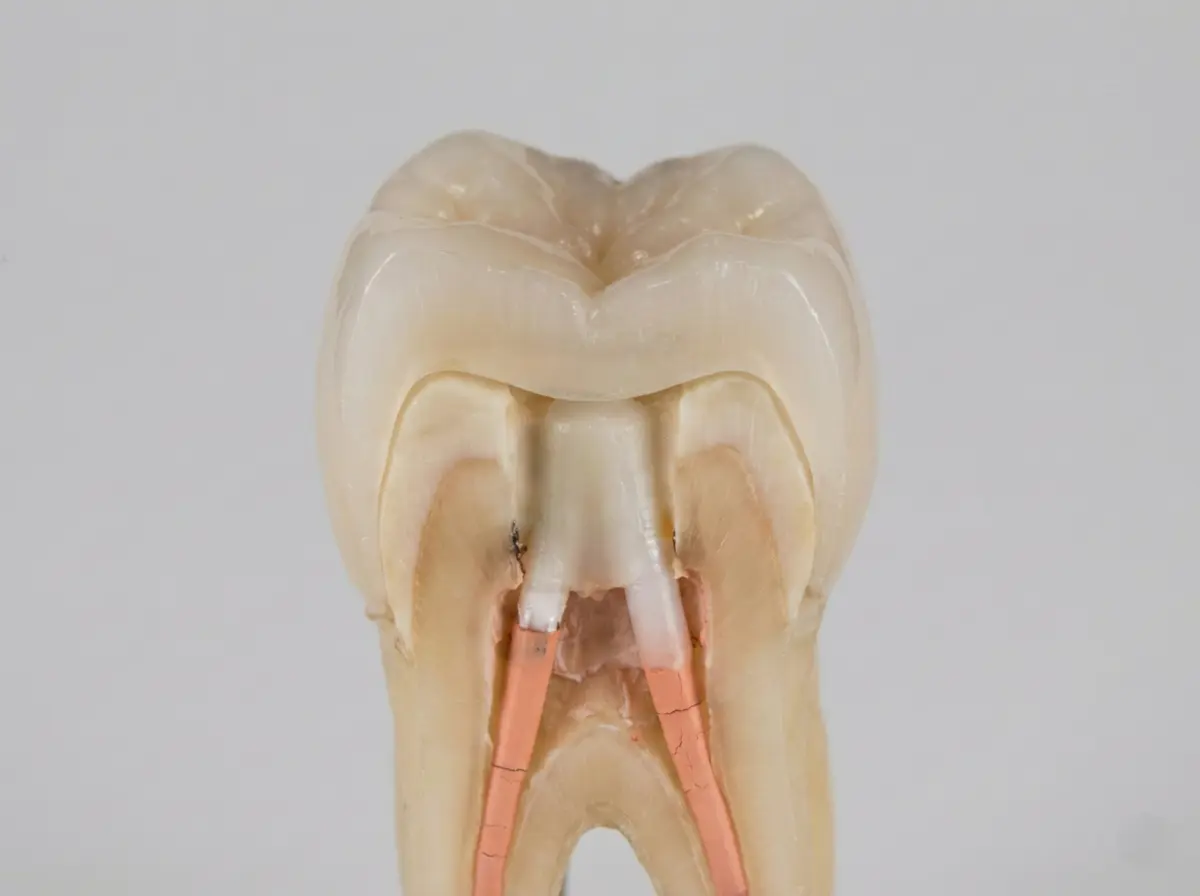
Zirconia crowns are full-coverage ceramic restorations designed to protect a tooth that has already lost strength. Specifically, dentists choose them for root canal treated teeth, cracked teeth, heavily filled teeth, severe discolouration and selected bridge cases.
However, they are not a cosmetic accessory. A crown requires reduction of the natural tooth to achieve full 360-degree coverage. For that reason, a crown is only the right answer when the tooth is genuinely compromised. If your enamel is healthy and your goal is purely aesthetic, E-Max veneers usually preserve far more natural structure.
Why dentists choose zirconia
High fracture resistance makes it ideal for molars and structurally weak teeth. In addition, its metal-free composition is biocompatible and well tolerated by the gums, with no grey line at the gum margin. Moreover, multi-layer zirconia reproduces the natural translucency of real teeth, so the result never looks flat or fake.
Who zirconia crowns suit, and who should avoid them
Material strength alone does not justify removing healthy tooth structure. Instead, the real question is not whether zirconia is strong. It is whether your tooth needs full coverage at all. Zirconia crowns are the correct clinical choice when one of the following applies:
A large filling covers more than half the tooth. The tooth has had a root canal and needs protection. The tooth is fractured or heavily worn. The discolouration is too deep for a veneer to mask. Or the bite needs full occlusal coverage to correct loading and alignment.
Real zirconia crown costs in Turkey (2026)
Zirconia crowns in Turkey start from €195 per tooth. However, the final figure depends on unit count, diagnosis, gum stability, bite forces and bridge design. Any responsible quote follows a clinical review, never a price list alone.
| Treatment option | Typical abroad range | IST Smile Experts | What changes the figure |
| Single zirconia crown | €900 to €1,500 | From €195 | Preparation complexity, gum condition, bite forces, unit count. |
| Full zirconia smile 20-unit framework | €18,000 to €25,000 | €3,900 to €4,500 | Exact unit count, occlusion planning, supportive care if needed. |
| 3-unit bridge Replaces 1 missing tooth | €2,700 to €4,500 | From €585 | Abutment condition, bridge design, gum support. |
What an all-inclusive zirconia crown package should include
A strong zirconia crowns package is not only a tooth price. Therefore, international patients need a complete clinical and travel structure, written clearly before they book flights.
Cost comparison for UK, USA, Canada and Australia
Patients from the UK, USA, Canada and Australia usually weigh local private fees against treatment in Istanbul. However, the price gap is not a red flag. It reflects lower clinical overhead and lab costs in Turkey, applied to the same high-strength multi-layer zirconia.
| Market | Local range (single crown) | Turkey starting point | How to read it |
| Canada (CAD) | $1,000 to $2,200+ | From €195 | Fees differ by province. Confirm suitability first, then compare the full treatment logic. |
| Australia (AUD) | $1,500+ | From €195 | Compare diagnosis quality, material level and workflow, not just price. |
| United Kingdom (GBP) | £700 to £1,200+ | From €195 | Private care varies widely. Use this as a framework, not a final quote. |
| United States (USD) | $1,000 to $2,500+ | From €195 | Complex cases cost more everywhere. Root canal and bridge work change the total. |
Your zirconia crown timeline in Istanbul, day by day
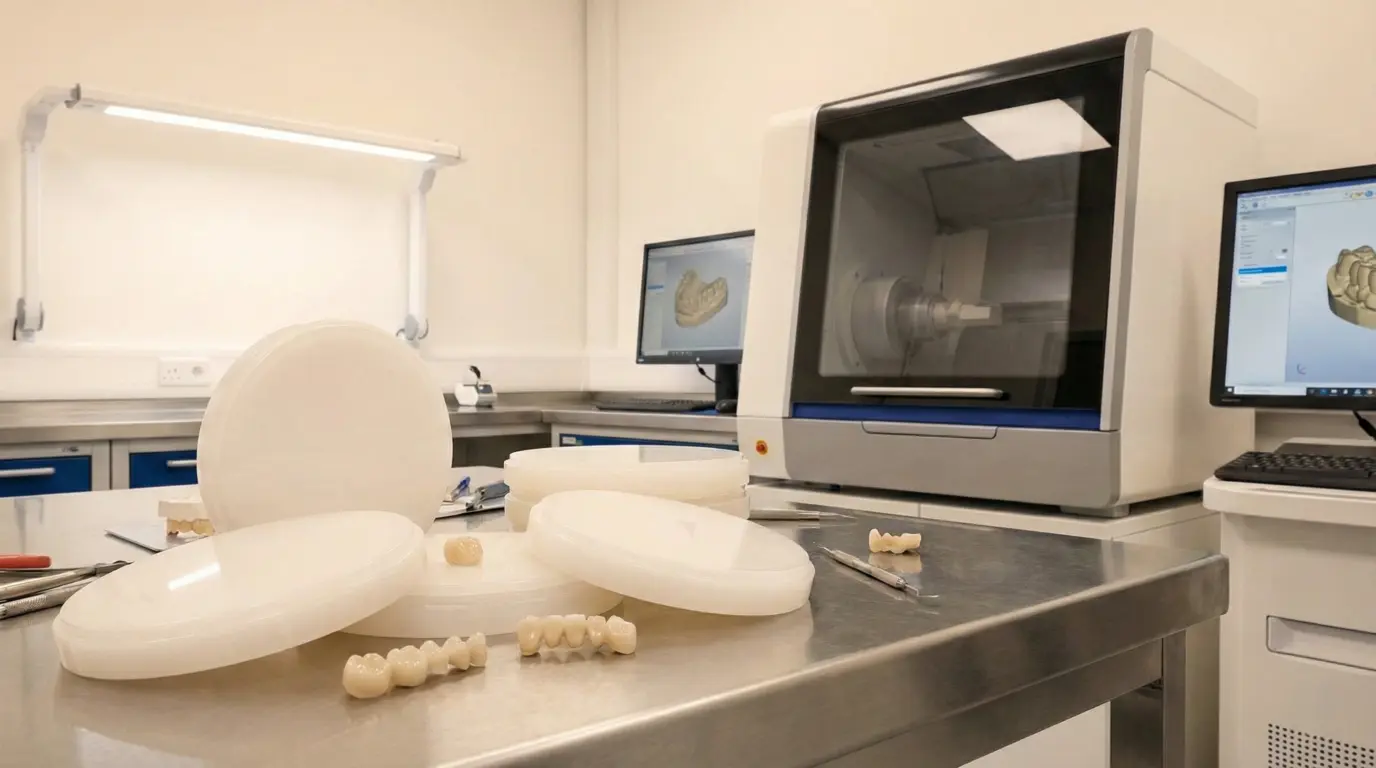
Most international zirconia crown cases complete in 3 to 5 clinic days. The exact sequence depends on diagnosis, unit count and gum condition, so the timeline always follows examination, never assumptions.
| Step | What happens | Why it matters |
| 1. Diagnosis | Clinical exam, photos, X-ray and CBCT if needed | Confirms if crowns are justified or a conservative option is safer. |
| 2. Digital scan | 3D intraoral scanning and bite registration | Drives accuracy in contacts, margins and final fit. |
| 3. Preparation | Conservative reduction plus bite planning | Protects tooth structure and limits biological loss. |
| 4. CAD/CAM design | Digital crown design for function and aesthetics | Controls thickness, contacts, bite and symmetry. |
| 5. Milling and finishing | Sintering, contouring, polishing and glazing | Surface quality affects comfort and long-term wear. |
| 6. Cementation | Isolation, cement protocol and fit verification | Reduces micro-leakage and debonding risk. |
| 7. Final check | Margins, contacts and bite refinement | Prevents discomfort, food trapping and long-term failure. |
Zirconia vs E-Max vs PFM vs composite: fast clinical comparison
Material selection should follow diagnosis, not trends. Therefore, use this as a decision framework before your clinical evaluation.
| Option | Best for | Strength | Aesthetics | Main limitation |
| Zirconia crown | Root canal, cracked teeth, molars, bridges, some bruxism | Very high | High | Needs more reduction than veneers |
| E-Max veneers | Cosmetic refinement with healthy enamel | Medium-high | Very high | Not ideal for severely damaged teeth |
| PFM | Strength priority, lower aesthetic demand | High | Medium | Possible grey gum line |
| Composite bonding | Small, conservative corrections | Low-medium | High short-term | Stains and chips sooner |
Still deciding between materials? Read our multi-layer vs monolithic zirconia guide, or compare the laminate route in our Hollywood Smile in Turkey guide.
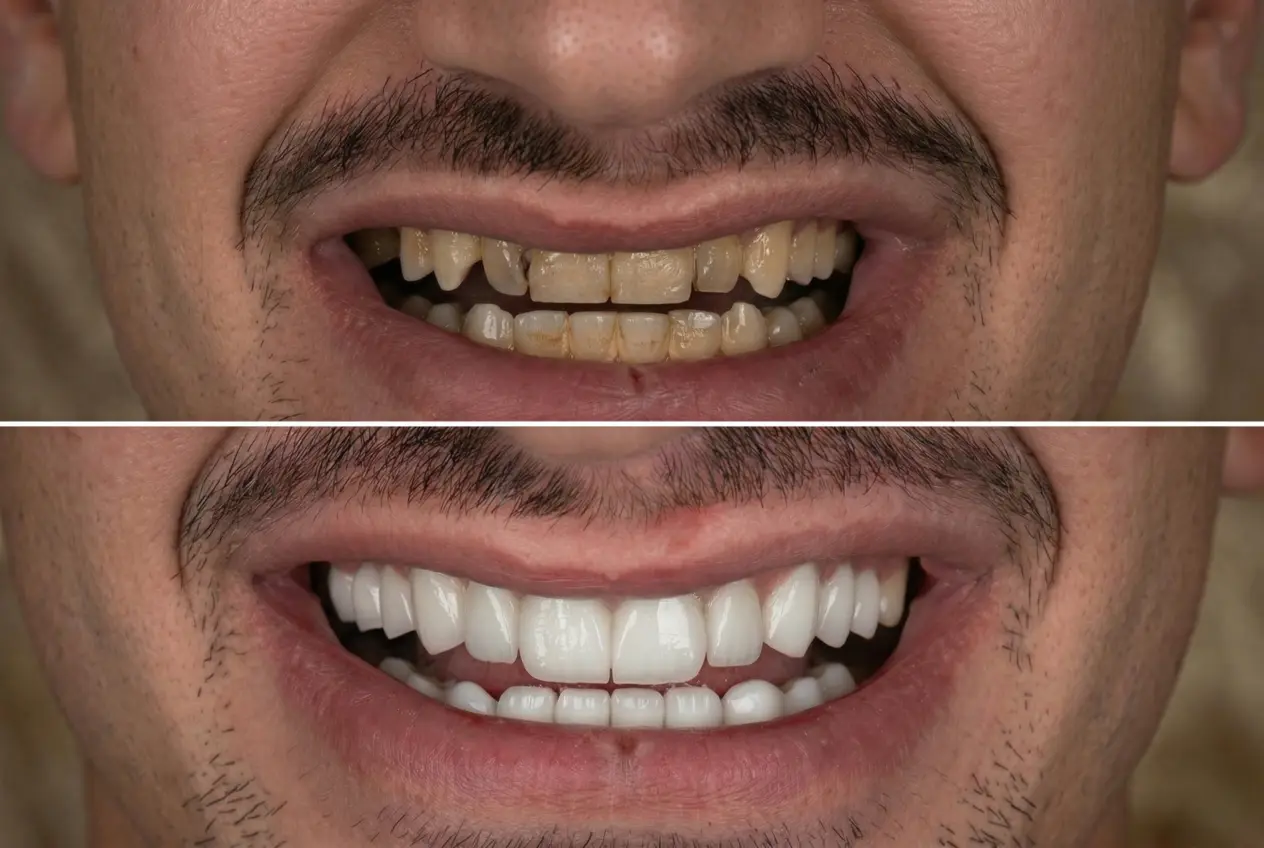
Patient results: full-mouth zirconia transformation
Every case we publish is a real international patient, treated and documented by our clinical team. In addition, a strong before-and-after section helps patients understand what zirconia crowns can change: tooth colour, tooth shape, smile line, gum harmony and facial confidence.
Why some zirconia crowns fail, and how we prevent it
Crowns usually fail because of execution, not because zirconia is weak. Long-term success depends on four things: margin quality, cementation protocol, bite management and whether the original plan was clinically justified. For example, open margins invite leakage. Weak cementation, meanwhile, reduces retention. Over-preparation weakens the tooth. And an uncontrolled bite drives chipping and stress. For this reason, our protocol verifies each one before final bonding.
Are zirconia crowns safe?
Yes. Zirconia is a metal-free, biocompatible ceramic, safe even for patients with metal sensitivities. Safety depends on case selection and execution, so we verify three checkpoints before confirming a crown is correct: gum stability for predictable margins, bite control for grinding and heavy-load cases, and a proper cement protocol to reduce micro-leakage. Still validating the bigger decision? Read is dental work in Turkey safe.
Certified material and technology partners




Frequently asked questions
Cost and value
How much does a zirconia crown cost in Turkey?
In 2026, zirconia crowns in Turkey start from €195 per tooth. Full-mouth packages run from €3,560 to €5,960, all inclusive. In addition, the final cost depends on diagnosis, unit count, bridge design, gum condition and bite management.
How long do zirconia crowns last?
With good hygiene, stable gums and a controlled bite, zirconia crowns last 15 to 20 years or more. Longevity depends more on execution and maintenance than on the material name alone, which is why every crown carries a 10-year written warranty.
Clinical questions and suitability
Are zirconia crowns better than E-Max veneers?
Not universally. In fact, zirconia is stronger and suits structurally weak teeth. E-Max is more conservative and aesthetic for healthy front teeth. Therefore, the better choice depends entirely on the clinical case.
Do zirconia crowns require shaving the teeth?
Yes. A crown is a full-coverage restoration, so it requires reduction of the natural tooth. For this reason crowns should be reserved for teeth that genuinely need structural support, not healthy teeth with cosmetic-only goals.
Will the crowns look fake or too white?
Not with our protocol. We use multi-layer zirconia that mimics the natural translucency of real teeth, and Digital Smile Design confirms your shade and shape before preparation begins. In particular, flat single-layer monolithic zirconia is not used on visible front teeth.
Travel, logistics and your package
How many days do I need in Istanbul?
Most zirconia crown cases take 3 to 5 clinic days. However, larger full-mouth rehabilitations may need 5 to 6 nights to allow lab production, try-in and a final control visit.
Are zirconia crowns suitable for teeth grinding?
They can be, because zirconia is strong. Therefore, the plan should include careful bite control and usually a night guard to protect the restoration from grinding forces.
How do I start from abroad?
Send 3 clear photos and an X-ray if you have one. After that, our clinical team confirms whether crowns are appropriate, estimates the unit count and proposes a travel-friendly timeline, normally within 12 hours.
Do zirconia crowns stain over time?
Zirconia is highly stain-resistant compared with natural enamel and composite bonding. That said, surface polish, oral hygiene, smoking habits and coffee or tea intake still affect the long-term appearance.
Can zirconia crowns fix crooked or uneven teeth?
In many cases, zirconia crowns can improve shape, symmetry and visible alignment. However, severe bite problems or major crowding may need orthodontic planning or a different treatment sequence.
What is included in a zirconia crowns package?
In particular, a responsible package should clearly explain the crown unit count, clinical diagnosis, digital smile planning, temporary teeth if needed, hotel support, VIP transfers, warranty terms and aftercare communication.
Can I choose the shade of my zirconia crowns?
Yes. Shade selection is part of the smile design process. Above all, the final shade should match the patient’s face, lips, age, skin tone and expectations, not only the brightest colour available.
Are zirconia crowns metal-free?
Yes. Zirconia crowns are metal-free ceramic restorations. As a result, this helps avoid the dark gum-line effect that can appear with some porcelain-fused-to-metal crowns.
Get your personalised zirconia crown plan
We do not send generic quotes. Send your photos and your case is reviewed individually by our clinical team, with a clear plan and a fixed all-inclusive price within 12 hours.
Send my photos for clinical reviewClinical disclaimer: results vary by individual case. A crown is a medical restoration and requires clinical evaluation. Pricing is case-dependent and confirmed after diagnosis. International comparisons are indicative and vary by city, provider fees, case complexity and exchange rates.