- IST Smile Experts Clinical Team
- 0 Comments
A dental bridge can restore a visible gap and improve chewing without implant surgery. But it is not automatically the best option for every missing tooth. The condition of the supporting teeth, gums, bite and bone must guide the decision.
Quick Answer: Is a Dental Bridge Right for You?
A fixed dental bridge may suit you when one or more teeth are missing and the neighbouring teeth or implants can provide reliable support. It becomes especially logical when the adjacent teeth already need crowns. If those teeth are healthy and untouched, a dental implant may preserve more natural tooth tissue. An examination and dental X-ray must confirm the final plan.
The First Decision Is Not “Zirconium or Porcelain”
The first decision is whether a bridge is the most responsible way to replace the tooth. A bridge transfers chewing forces to its supporting teeth or implants. Those supports must have enough strength, healthy gums and a manageable bite. Material selection only comes after the clinical team confirms that foundation.
At IST Smile Experts, the treatment plan starts with the gap, the supporting structures and your long-term maintenance needs. We do not recommend a bridge simply because it finishes faster than an implant.
A bridge may make good clinical sense when:
- One or more teeth are missing in a suitable span.
- The teeth beside the gap already have large fillings or need crowns.
- The supporting teeth and gums remain stable.
- You want a fixed option but cannot or do not wish to have implant surgery.
- The bite allows the bridge to carry force safely.
An implant may deserve stronger consideration when:
- The teeth beside the gap are healthy and have never needed crowns.
- You want to avoid reshaping neighbouring teeth.
- Bone and general health permit implant treatment.
- You accept a surgical procedure and a longer healing period.
- Independent cleaning around the replacement matters to you.
We may postpone bridge treatment when:
- Active gum disease or uncontrolled decay needs treatment first.
- A supporting tooth has an uncertain root or fracture prognosis.
- The extraction site needs more healing.
- Severe grinding or an unstable bite creates excessive load.
- The proposed span lacks enough reliable support.
What a proper assessment checks
- Clinical examination and appropriate imaging
- Health of the abutment teeth and their roots
- Gum and bone support
- Size and location of the missing-tooth gap
- Bite, grinding habits and cleaning ability
What Is a Dental Bridge?
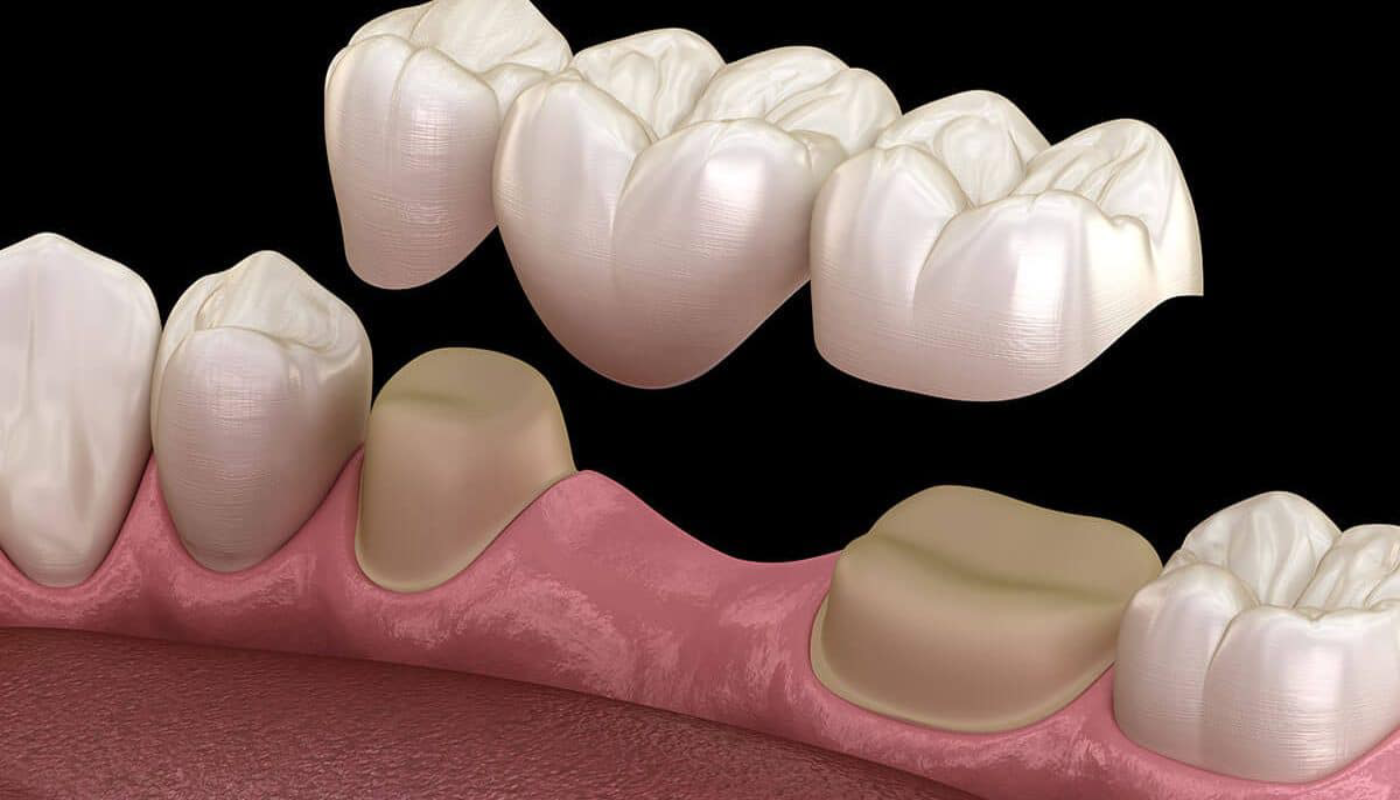
A dental bridge is a fixed prosthetic restoration that replaces one missing tooth or a row of missing teeth. The artificial replacement tooth is called a pontic. The natural teeth or implants that support it are called abutments.
A common three-unit bridge uses two crowns on the supporting teeth and one pontic between them. That explains why clinics price bridges by the number of units, not only by the number of missing teeth. A three-unit bridge contains three connected units even though it usually replaces one missing tooth.
“Fixed” does not mean “lasts forever”
A dental professional cements or screws a fixed bridge in place, so the patient does not remove it daily. However, every bridge has a service life. Published patient guidance reports an average of about 5 to 15 years, with some lasting longer when the supporting teeth, bite and hygiene remain favourable.
Types of Dental Bridges
1. Traditional Tooth-Supported Bridge
This common design places crowns on teeth at both sides of the gap and connects them to one or more pontics. It can provide strong support, but the dentist must reshape the abutment teeth. That preparation is irreversible.
2. Cantilever Bridge
A cantilever bridge gains support from only one side. It carries different mechanical loads and is generally less resistant than a bridge supported from both sides. The clinical team should restrict it to carefully selected locations and bite conditions.
3. Maryland or Resin-Bonded Bridge
This conservative design uses wings bonded behind neighbouring teeth instead of full crowns. It often suits selected front-tooth cases, where chewing forces are lower. It may debond under unfavourable loading and generally does not replace a conventional posterior bridge.
4. Implant-Supported Bridge
Implants rather than natural teeth support this bridge. It can replace several consecutive missing teeth without crowning healthy neighbouring teeth. It requires surgery, adequate healing and usually more than one treatment trip because implants must integrate with the bone before the final bridge.
Dental Bridge vs Implant vs Removable Partial Denture
No option wins in every case. The following comparison helps you understand the trade-offs before your assessment.
| Decision factor | Tooth-supported bridge | Dental implant | Removable partial denture |
|---|---|---|---|
| Support | Neighbouring natural teeth | Implant placed in jawbone | Teeth and/or oral tissues |
| Effect on adjacent teeth | Usually requires irreversible reshaping | Usually leaves adjacent teeth untouched | Usually avoids full crown preparation |
| Surgery | Usually no implant surgery | Yes | Usually no |
| Typical timeline | Commonly 5 working days at our clinic | Often several months including healing | Depends on design and healing |
| Cleaning | Requires daily cleaning under the pontic | Requires daily implant-specific hygiene | Removed for cleaning |
| Best considered when | Abutment teeth can support the span, especially if they need crowns | Healthy adjacent teeth should remain untouched and surgery is suitable | A non-fixed or more economical option is preferred |
Read our detailed dental implants in Turkey guide before comparing fixed treatment options. If you prefer a removable partial denture, ask the clinical team to include it in your written comparison.
Dental Bridge Cost in Istanbul in 2026
IST Smile Experts lists zirconium restorations from €195 per unit. Because a bridge contains connected crowns and pontics, the total depends on the number of units in the approved design.
| Example design | What it usually means | Calculation | Indicative cash price |
|---|---|---|---|
| One zirconium unit | Pricing basis for each crown or pontic unit | 1 × €195 | From €195 |
| Three-unit bridge | Commonly two abutment crowns plus one pontic | 3 × €195 | From €585 |
| Four-unit bridge | Design varies according to the gap and support | 4 × €195 | From €780 |
| Five-unit bridge | Only when the support and bite make the span appropriate | 5 × €195 | From €975 |
Pricing note: These are indicative 2026 cash-price examples, not a diagnosis or binding quotation. X-rays, gum treatment, extraction, root canal treatment, posts, temporary solutions or implant components may change the plan and cost. We confirm every item in writing after clinical assessment. View the current Istanbul dental price list.
Why can treatment cost less in Istanbul?
Laboratory, staffing and operating costs differ between countries. These structural differences can reduce the treatment price without changing the need for careful diagnosis, traceable materials, fit checks and aftercare. Compare written plans line by line: material, number of units, temporary bridge, imaging, any foundation treatment, warranty terms and who handles follow-up.
A low headline price can hide a different treatment
Ask whether the quote covers each bridge unit, only the pontic, or the complete restoration. Also ask whether the proposed plan crowns healthy teeth that an implant could preserve. The safest comparison examines treatment design, not only the total.
Zirconium Bridge or Porcelain-Fused-to-Metal Bridge?
| Feature | Zirconium bridge | Porcelain-fused-to-metal bridge |
|---|---|---|
| Core | Metal-free zirconia framework or monolithic zirconia | Metal framework covered with porcelain |
| Aesthetics | Can provide a natural tooth-coloured result with no metal margin | Can look natural, but the metal layer may affect light transmission |
| Strength | Strong, with material and design selected for the span | Long-established strength; porcelain can chip |
| Selection | Often preferred when strength and metal-free aesthetics matter | May suit selected clinical or budget situations |
The clinical team must choose the material together with the bridge design. Span length, available space, bite force, tooth colour and opposing restorations can all affect that decision.
Dental Bridge Procedure at IST Smile Experts
A straightforward tooth-supported bridge commonly requires 5 working days and 6 nights in Istanbul. Complex foundation treatment can extend the schedule. Implant-supported bridges follow a different, multi-stage timeline.
- Remote pre-assessmentSend clear dental photographs and any recent X-rays. The clinical team can explain likely options and an estimated range, but this does not replace an in-clinic diagnosis.
- Examination and imaging in IstanbulWe examine the gap, supporting teeth, roots, gums and bite. We then confirm whether a bridge, implant or another option offers the better prognosis.
- Consent and tooth preparationIf you choose a conventional bridge, the clinician numbs the area and prepares the abutment teeth. You receive an explanation of the irreversible nature of this step before treatment.
- Impressions, records and temporary bridgeWe record the prepared teeth, bite and shade for laboratory fabrication. A temporary bridge protects the prepared teeth while the final restoration is made.
- Try-in and clinical checksThe team evaluates margins, contact points, bite, shade and shape. Adjustments take priority over rushing to final cementation.
- Final placement and aftercareAfter approval, the clinician secures the bridge and checks your bite again. We show you how to clean under the pontic and explain what symptoms require follow-up.
Benefits, Limitations and Real Risks
Potential benefits
- Restores a fixed tooth shape in the gap
- Can improve chewing and speech
- May help limit movement of adjacent teeth
- Usually avoids implant surgery
- Often completes faster than implant treatment
Limitations and risks
- Traditional bridges require irreversible tooth preparation
- Decay or gum inflammation can develop around supports
- A supporting tooth can fracture or lose vitality
- The bridge may loosen, chip or require replacement
- Cleaning under connected units needs extra technique
Root canal treatment is not automatic before a bridge. The clinical team recommends it only when symptoms, examination or imaging indicate pulpal disease or a specific restorative need. Some prepared teeth can later develop sensitivity or require root canal care; no ethical clinic should promise zero risk.
How Long Does a Dental Bridge Last?
Patient guidance from Cleveland Clinic reports an average lifespan of 5 to 15 years, while some bridges last longer. Longevity depends less on marketing labels and more on the supporting teeth, bridge design, fit, bite forces, hygiene, smoking, diet and regular professional reviews.
Daily care that protects the bridge
- Brush twice daily with fluoride toothpaste and a soft brush.
- Clean under every pontic with a floss threader, super floss or a suitable interdental brush.
- Use a water flosser as an additional tool, not an automatic replacement for mechanical cleaning.
- Avoid biting ice and other objects that can overload the porcelain or zirconia.
- Ask about a night guard if you grind or clench your teeth.
- Arrange regular examinations and professional cleaning with your local dentist.
Contact a dentist if:
- The bridge feels loose or develops a crack.
- You notice pain on biting or increasing sensitivity.
- The gum around the bridge bleeds, swells or develops a persistent bad taste.
- Food repeatedly traps under a new bridge despite correct cleaning.
- Your bite suddenly feels different.
Our Safest Recommendation Can Be “Not Yet” or “Choose Another Option”
IST Smile Experts clinical team may decline or modify a bridge plan if the support is weak, the span is too long, gum disease is active, the bite creates excessive risk, or preparing healthy teeth would not serve your long-term interests. This diagnosis-first approach protects natural tissue and makes the treatment recommendation easier to trust.
Planning Your Dental Bridge Trip to Istanbul
For a standard tooth-supported bridge, plan around 5 working days and 6 nights. Do not book a return flight immediately after the first fitting. The laboratory and clinical team may need time for a correction or an additional bite check.
- Send recent X-rays if available, but expect new imaging when clinically necessary.
- List your medications, allergies and relevant medical conditions.
- Tell us about grinding, previous root canals, gum disease and bridge failures.
- Keep copies of the final plan, invoice, material details and aftercare instructions.
- Maintain a relationship with a dentist at home for routine reviews and cleaning.
Related Treatment Guides
Dental Bridge FAQs
How much does a dental bridge cost in Istanbul in 2026?
IST Smile Experts lists zirconium restorations from €195 per unit. A common three-unit zirconium bridge therefore starts from €585. The final number of units and any foundation treatment depend on examination and imaging.
What does a three-unit dental bridge mean?
A conventional three-unit bridge usually includes two crowns on supporting teeth and one artificial tooth, called a pontic, between them. It contains three connected units but commonly replaces one missing tooth.
How many days do I need in Istanbul for a dental bridge?
A straightforward tooth-supported bridge commonly needs 5 working days and 6 nights at IST Smile Experts. Additional gum, root canal or foundation treatment can extend the schedule. Implant-supported bridges require a longer multi-stage plan.
Is a bridge better than a dental implant?
Neither option is better for every patient. A bridge can finish faster and usually avoids surgery, but a conventional bridge requires preparation of supporting teeth. An implant usually preserves adjacent healthy teeth but requires surgery, sufficient bone and a longer healing period.
Do dentists shave the teeth next to the gap?
For a conventional tooth-supported bridge, the dentist reshapes the abutment teeth so the supporting crowns can fit. This step removes tooth structure and is irreversible. A resin-bonded bridge or implant may reduce or avoid full crown preparation in suitable cases.
Is root canal treatment required before a dental bridge?
No. Root canal treatment is not automatic. The clinical team recommends it only when symptoms, examination, imaging or the condition of the tooth indicates a need. Some prepared teeth can later develop sensitivity or require root canal care.
How long does a dental bridge last?
Published patient guidance reports an average lifespan of about 5 to 15 years, and some bridges last longer. Supporting-tooth health, fit, bite, daily cleaning, smoking and regular dental reviews all influence longevity.
Can a dental bridge replace several missing teeth?
Yes, but longer spans need stronger support and careful bite analysis. The clinical team must assess the number and position of missing teeth, the health of natural abutments, and whether implants would create a more predictable design.
Is getting a dental bridge painful?
The clinician normally uses local anaesthesia during tooth preparation, so you should not feel sharp procedural pain. Temporary sensitivity and gum tenderness can occur. Contact the clinic if pain increases, persists or affects biting.
Can food get under a dental bridge?
Food and plaque can collect under the pontic if you do not clean the area correctly. Use a floss threader, super floss or an interdental brush every day. Persistent trapping around a new bridge may also require a clinical fit check.
Can I get a bridge immediately after tooth extraction?
Sometimes the clinical team can provide a temporary solution, but the final bridge may need to wait while the gum and bone heal. The timing depends on the extraction site, infection, tissue changes and the planned bridge design.
What information should I send for an online bridge estimate?
Send clear photographs of the gap, both arches and your bite, plus a recent panoramic X-ray if available. Include relevant medical conditions, medications and previous treatment. The estimate remains provisional until an in-clinic examination confirms the diagnosis.
Last content review: July 27, 2026
This guide provides general information and does not replace an individual diagnosis.
Clinical Sources
Start With the Diagnosis, Not a Package
Send your photos and X-ray for a preliminary clinical review. We will explain whether a bridge, implant or another option better protects your long-term oral health, then provide an itemised estimate.