Planning Full-Arch Treatment in Turkey?
Request a private All-on-4 or All-on-6 assessment from IST Smile Experts Clinical Team.
Send your panoramic X-ray or CBCT, medical history and preferred travel month for an initial suitability review.
All-on-4 vs All-on-6: the short answer
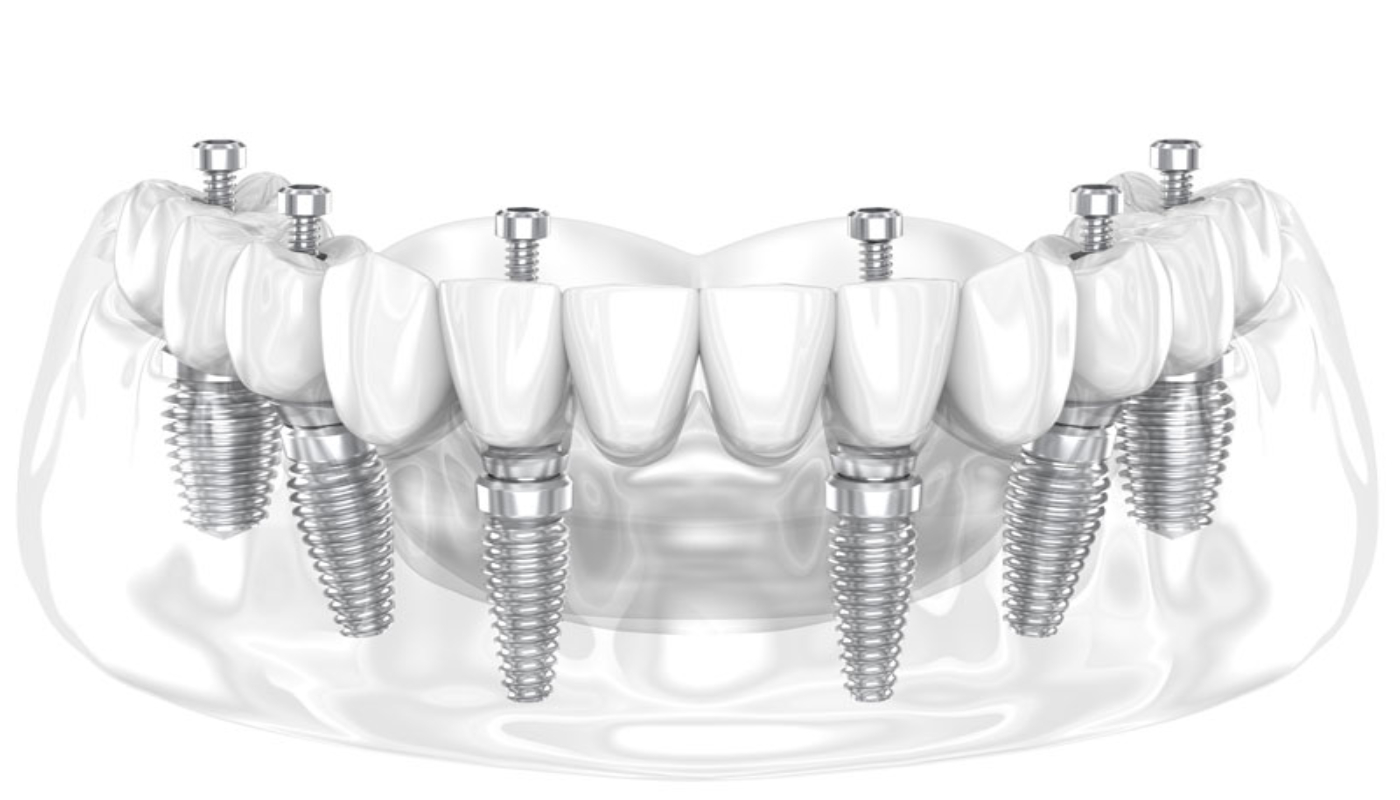
All-on-4 uses four implants per jaw, while All-on-6 uses six implants when bone volume, bite forces and implant distribution support the additional fixtures. Neither option is automatically better. A CBCT review, bone volume, grafting needs, bite and prosthetic design determine suitability. Full-arch care normally requires two visits: temporary fixed teeth may be fitted at the first visit when clinically suitable, followed by the final bridge after about 3 to 6 months of healing.
If you are still researching the broader context, start here: Dental implants in Turkey . For structured full-arch options, see: All-on-4 packages in Turkey.
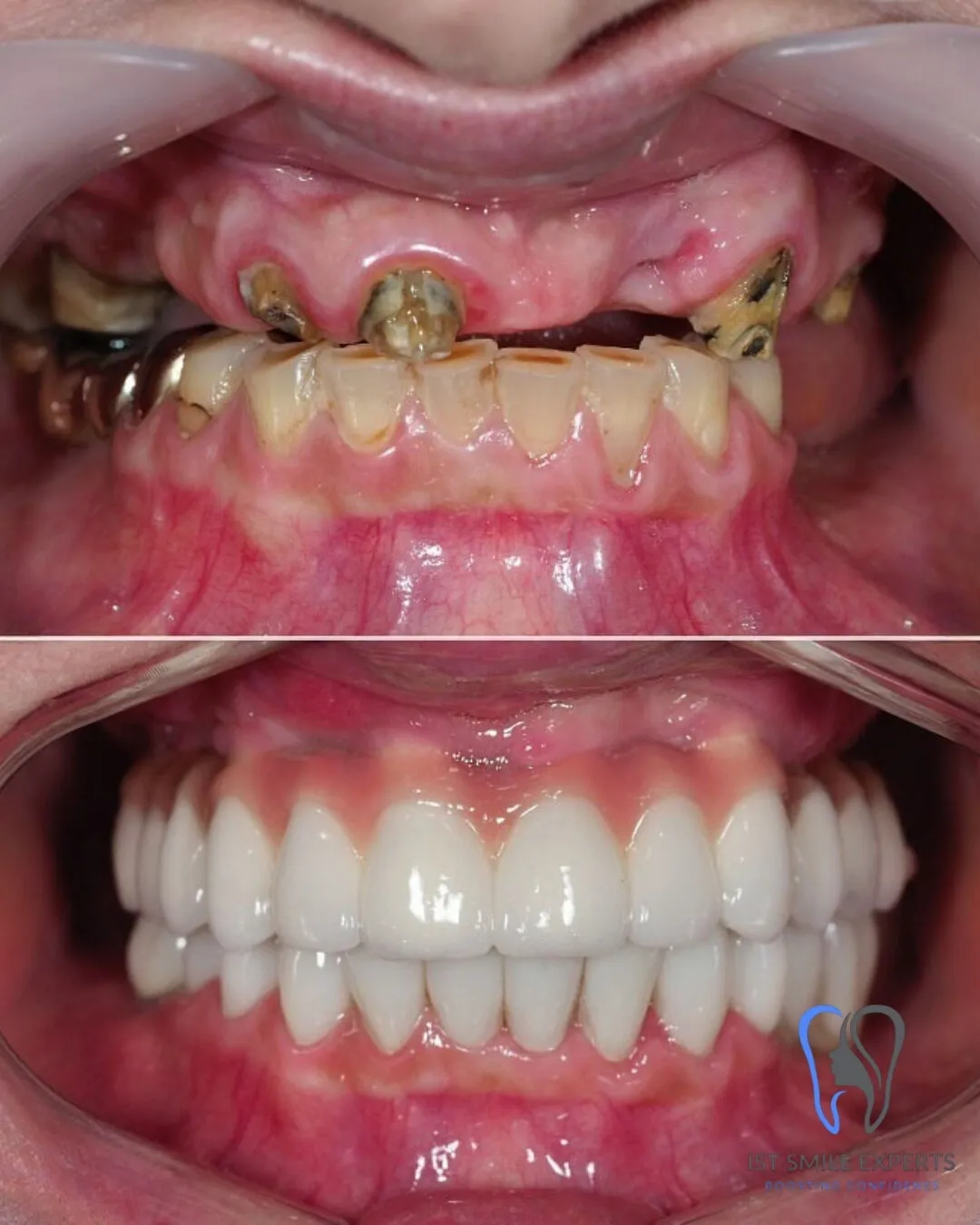
 Clinical transformation: from missing teeth to a fixed Zirconia arch.
IST Smile Experts Clinical Team
“All-on-X is a clinical and prosthetic plan. The recommended implant distribution depends on CBCT findings, bone volume, bite forces and the final bridge design.”
1) The real difference: engineering, not marketing
The choice is dictated by load distribution and anatomy. Therefore, the correct system is the one that keeps forces stable over years, not days.
Clinical decision matrix: who fits All-on-4 vs All-on-6?
| Clinical factor | When All-on-4 is typically preferred | When All-on-6 is typically preferred | What confirms it |
|---|---|---|---|
| Bone anatomy Posterior bone volume | Posterior bone is limited; tilted posterior implants help avoid aggressive grafting. | Posterior bone is adequate, allowing two extra anchors for distribution. | CBCT measurements (bone height/width + sinus/nerve map) |
| Bite forces Bruxism / heavy bite | Possible with strict bite design and protective protocol. | Often preferred for higher forces due to added distribution points. | Occlusion analysis + clinical bite assessment |
| Arch width Wider arches | Works in many cases; design becomes more sensitive to cantilever control. | Often preferred in wider arches to reduce mechanical leverage. | CBCT + intraoral scan + prosthetic design plan |
| System goals Maximum stability | Stability depends on surgical torque + strict healing protocol. | Generally offers higher mechanical tolerance long-term. | Primary stability + staged loading plan |
If we can’t confirm it clinically, we don’t sell it
Send your panoramic X-ray or CBCT when available. We will explain which option appears suitable, which findings still need an in-person examination and whether grafting may be required.
 WhatsApp clinical evaluation
 Implants pillar context
2) Engineering table: stability, stress, and long-term maintenance
| Factor | All-on-4 protocol | All-on-6 protocol |
|---|---|---|
| Load distribution | Effective when designed correctly; distribution relies more on prosthetic engineering. | More distribution points; typically higher mechanical tolerance. |
| Cantilever sensitivity | More sensitive if posterior support is limited; design must be controlled. | Often reduced due to added posterior anchorage options. |
| Bone graft probability | Often lower; tilted implants can reduce need for grafting in some cases. | May require posterior bone availability or grafting to place extra implants safely. |
| Maintenance expectations | Regular hygiene + checks; protection is essential in heavy bite cases. | Same hygiene standards; may be more forgiving under load if designed well. |
| Visit protocol | 2 visits (surgery + healing, then final bridge). | 2 visits (same protocol; reinforced distribution plan). |
3) 2026 cost framework (EUR)
Pricing is case-dependent. Therefore, the correct number of implants and bridge type are confirmed after CBCT planning.
| Package | Typical inclusions | Investment range (EUR) | Best suited for |
|---|---|---|---|
| All-on-4 (single jaw) | CBCT planning, four implants, temporary fixed teeth at Visit 1 when clinically suitable, and the final bridge after about 3 to 6 months of healing. | From €2,900 per jaw | Cases where four well-distributed implants can support the planned full-arch restoration. |
| All-on-6 (single jaw) | CBCT planning, six implants when anatomy allows, temporary fixed teeth at Visit 1 when clinically suitable, and the final bridge after healing. | From €3,500 per jaw | Cases where bone volume, bite forces and prosthetic design support two additional implants. |
| Upper and lower arches | Individual planning for each jaw, implant system selection, healing stages, final bridge material and maintenance requirements. | Personalised quotation | Patients whose CBCT and clinical examination confirm full-mouth implant suitability. |
Price note: The figures above are starting prices verified on the live package page. The final quotation depends on CBCT findings, bone condition, implant system, grafting needs and final bridge design. For structured package details, see: All-on-4/6 implant packages in Turkey.
Price is meaningless without stability control
If six implants are clinically indicated for load distribution, the recommendation should be based on CBCT findings and prosthetic design, not on the lower headline price. Final suitability is confirmed after examination.
 View packages
4) When we say NO (to protect outcomes)
High success is not luck. It is selection and protocol control. Therefore, we refuse cases when biology is not stable.
| Condition | Why we pause / refuse | What we do instead |
|---|---|---|
| Active gum disease | Inflammation increases peri-implant risk. | Stabilize gums first, then re-assess. |
| Uncontrolled diabetes | Healing predictability decreases. | Coordinate medical stabilization, then plan safely. |
| Heavy smoking (no reduction) | Higher failure and complication risk. | Set reduction protocol during healing phase. |
| Requests for rushed “fast-track” loading | Biology cannot be discounted. | 2-visit protocol with controlled staged healing. |
This approach is designed for patients who value careful diagnosis, a staged healing protocol and long-term maintenance. The lowest headline price should not replace a personalised clinical plan.
One step to confirm the right system
Confirm your travel month, then send your X-ray. We will respond with the system recommendation (All-on-4 or All-on-6) and the staged protocol required.
 Broader implants pillar
Clinical FAQ
1) Is All-on-6 always better than All-on-4?
2) Why does full-arch treatment normally require two visits?
3) Are the teeth fixed or removable?
4) Can I have All-on-4 or All-on-6 if I have bone loss?
5) What can change the starting price?
6) Can smokers receive full-arch implants?
7) Is implant success guaranteed?
8) What should I send for a private assessment?
Patients travelling from Canada can use our full-arch planning guide for Canadian patients to review required records, staged travel and follow-up between visits.
Build a personalised full-arch plan
Book an appointment or send your imaging so IST Smile Experts Clinical Team can review implant distribution, bone needs, treatment timing and the likely package.
Our Trusted Global Partners & Technology