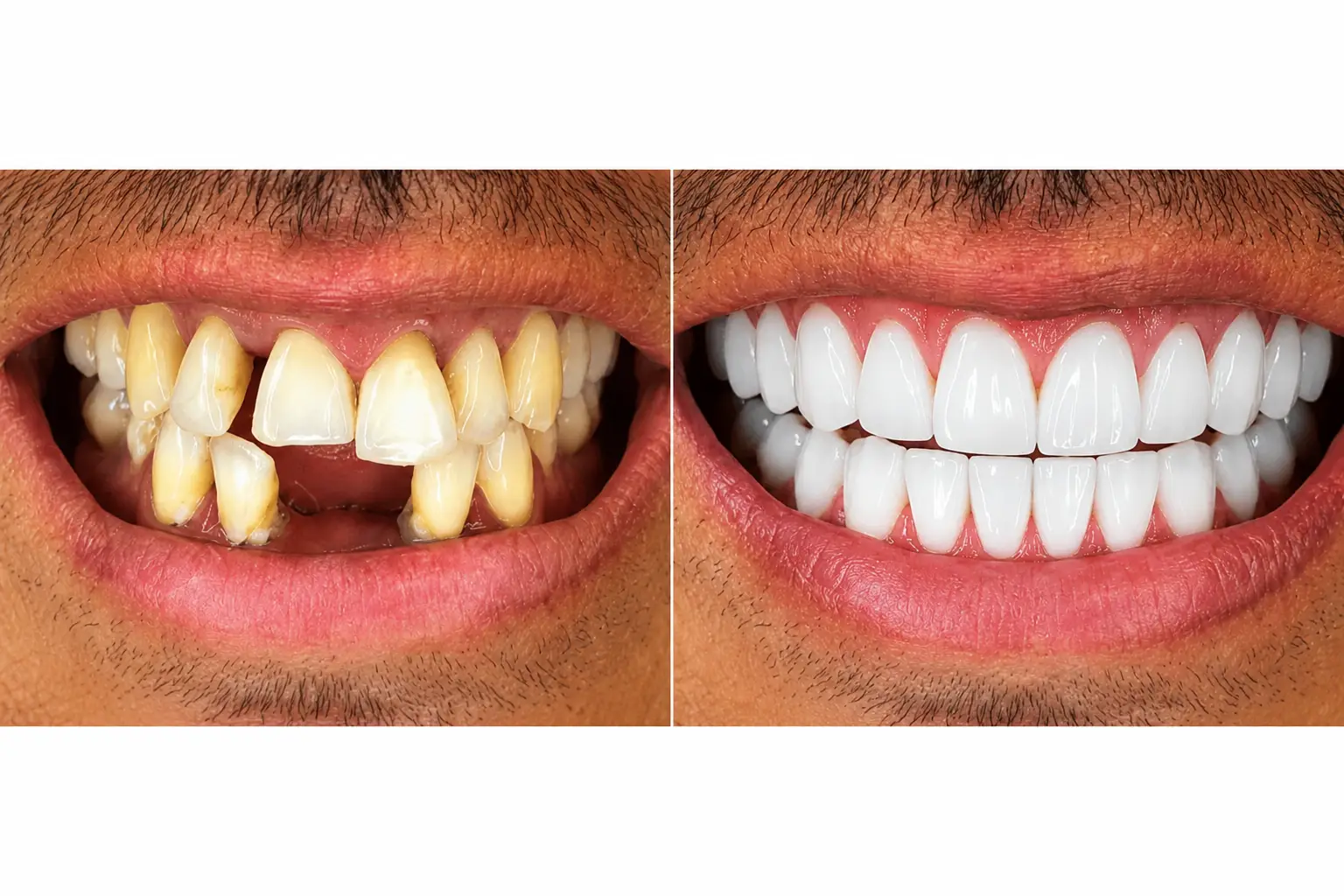
Implant revision evaluates a loose, infected, painful or bone-losing implant and identifies the safest next step. Therefore, a clinical examination and CBCT review help the team decide whether to treat, remove, graft or replace it.
Dental implants can fail because of infection, insufficient bone integration, overload, component problems or treatment-planning factors. At IST Smile Experts in Istanbul, the Clinical Team approaches implant revision by diagnosing the cause, protecting remaining bone and planning the restoration around the individual scan.
Clinical note: A loose or painful implant, swelling or radiographic bone loss needs prompt professional assessment. In addition, early diagnosis may preserve more bone and keep more treatment options open. If you have severe facial swelling, fever, or difficulty swallowing or breathing, seek urgent care at your nearest hospital first.
Start With a Private Review of Your Scan
Before any decision, our Clinical Team reviews your case directly from your own images. Send a panoramic X-ray or CBCT scan on WhatsApp, and your private case review tells you:
- Whether the team can treat the failing implant in place or needs to remove and replace it.
- How much bone has been lost, and what grafting your case actually requires.
- The review outlines a provisional surgical timeline and the decisions that remain before travel.
Signs Your Dental Implant May Be Failing
One symptom is enough to justify a scan. Earlier assessment may preserve more bone and keep more treatment options available. Watch for:
- The implant or tooth moves
- Pain when biting
- Swelling around the implant
- Bad smell or taste
- Gum bleeding
- Pus around the gum
- Exposed implant threads
- Bone loss on X-ray
- The bridge feels loose
- Repeated infection
Why Dental Implants Fail
Common causes include peri-implant infection, inadequate bone integration, overload, implant-position problems and prosthetic complications. Therefore, diagnosis must identify both the biological and mechanical cause before treatment begins.
Peri-implantitis can damage the gum and supporting bone, while overload or a loose component can destabilise the restoration. An independent dental implant team in Turkey should review the scan, implant stability, bite and prosthetic design before recommending implant revision.
Why Early Assessment Matters
A failing implant may continue to lose supporting bone if infection or instability persists. As a result, early assessment can clarify whether cleaning, component repair, removal or grafting is appropriate before the defect becomes more complex.
Implant Revision & Salvage Framework (2026)
- Primary Failure VectorsPeri-implantitis, mechanical torque loss, over-preparation.
- Diagnostic TrackingThree-dimensional review of bone volume, defect shape and nearby anatomy when CBCT is indicated.
- Surgical TeamSpecialist oral and maxillofacial surgeons and prosthodontists.
- Bone ReconstructionAlveolar ridge preservation, localised sinus elevation.
- Material StandardsTraceable barcoded platforms (Straumann, Nobel Biocare, Medigma).
- Case ReviewPriority review of submitted CBCT or X-ray data.
Can Implant Revision Save a Failing Implant?
However, not every failing implant has to come out. The Clinical Team bases the decision on examination and imaging, not the symptom alone. This is the framework our Clinical Team applies:
| Finding | Likely Option |
|---|---|
| Early inflammation, stable implant | Cleaning and debridement. |
| Bone loss but implant stable | Peri-implantitis treatment, possible regeneration. |
| Mobile implant | Removal usually required. |
| Severe bone defect | Graft first, new implant later. |
| Full-arch bridge moving | Full structural review of the whole arch. |
Original Clinic Follow-Up or an Independent Revision Review?
When an implant starts to fail, ask any treating clinic to explain the diagnosis, bone findings, implant stability, proposed procedure and aftercare in writing. An independent review can be useful when the cause remains unclear or the proposed plan does not address the bone, bite and prosthetic design together.
| Clinical Question | What to Verify | IST Smile Experts Approach |
|---|---|---|
| Cause of failure | Ask for the clinical and radiographic findings. | The team reviews marginal bone, implant stability, bite and the restoration on CBCT and examination. |
| Treatment sequence | Confirm whether cleaning, removal, grafting or replacement comes first. | The written plan links each stage to the diagnosed biological or mechanical problem. |
| Bone management | Ask whether grafting or a sinus procedure is clinically necessary. | The team bases grafting decisions on the defect, remaining bone and future implant position. |
| Component records | Request the implant brand, size and component details. | The clinic records traceable implant components and supplies authenticity documentation for new implant parts. |
Where Can You Seek Implant Revision Care?
You may return to the original clinic, consult a specialist near home or request an independent revision review in Istanbul. Compare the options by diagnosis, surgical experience, bone-management plan, component records, treatment timeline and aftercare rather than price alone.
Before booking travel, request a written provisional plan based on your panoramic X-ray or CBCT. The clinic should also explain which decisions still require an in-person examination.
Dental Implant Revision Cost in Turkey
Implant revision can be more complex than first-time placement because infection control, implant removal or bone reconstruction may be necessary. Pricing depends on whether the team can treat the implant in place or must remove, graft and replace it. The clinic confirms the final plan only after CBCT review and an in-person examination.
| Component | Indicative Cost |
|---|---|
| CBCT review and treatment plan | Included with your case review. |
| Implant removal (explantation) | Confirmed per implant after CBCT. |
| Bone graft | Quoted after defect assessment. |
| Sinus lift (when required) | Confirmed after CBCT. |
| New implant | From EUR 550 standard, EUR 990 premium. |
| Temporary / healing prosthesis | Quoted per case if needed. |
Indicative figures using "from" pricing. The team itemises your exact plan after reviewing your CBCT.
The 4-Stage Clinical Revision Protocol
Reversing a failing implant or full-arch structure follows a disciplined, staged surgical sequence carried out by specialist oral surgeons:
Stage 1: Cross-Sectional Digital Mapping. A CBCT scan can show three-dimensional bone volume, defect shape and nearby anatomy when that information is needed for revision planning. Diagnosis also requires medical history, clinical examination, implant-stability checks, periodontal probing and appropriate two-dimensional radiographs.
Stage 2: Atraumatic Explantation & Debridement. When removal is indicated, the surgeon uses a technique selected for the implant, bone defect and surrounding anatomy, then debrides diseased tissue as required while aiming to preserve available bone.
Stage 3: Structural Alveolar Reconstruction. Where bone loss is significant, we use advanced bone grafting, localised sinus lifting, or alveolar ridge preservation to rebuild a secure foundation.
Stage 4: Reassessment and restorative completion. After clinical and radiographic reassessment, the team may place a replacement implant when indicated. The final restoration follows the required stability and healing checks. Material and design depend on the individual prosthetic plan, including full-arch All-on-4 and All-on-6 options when suitable.
Traceable Technology: The Safety Standard Behind Revision
Traceable implant components and clear records support safer long-term maintenance after revision. Depending on the case, our documented international systems may include, when clinically indicated:
- Intraoral Optical Scans: systems such as
3Shape TRIOSoriTero Element 5Dto capture micro-margins and remove the distortion of traditional impressions. - Surgical Planning: guided-planning software such as
Straumann CoDiagnostiXto map fixture vectors away from critical nerve paths. - Biological Materials: bone matrices such as
Geistlich Bio-Ossand specialised barrier membranes to protect long-term stability.
Documented implant systems


The clinic records the manufacturer, batch and serial data for every new implant component and supplies its authenticity documentation. This helps qualified specialists identify the components later. See our transparent treatment pricing for context on revision planning.
What to Send Us
The faster your Clinical Team can read your case, the faster you get a real answer. On WhatsApp, send whatever you have:
- Panoramic X-ray, and CBCT scan if available.
- Photos of your smile and the affected area.
- A photo of your implant card or passport, if you have one.
- Your symptoms and when they started.
- The date of the original treatment and the implant brand, if known.
An Illustrative Implant Revision Pathway
A revision pathway may begin with CBCT imaging and an examination of implant mobility, infection, bone loss and the prosthetic load. If the team cannot treat an unstable implant in place, the surgeon may remove it, clean the site and rebuild deficient bone. After healing, the team can reassess the site for a new implant and later plan the final restoration.
Illustrative pathway only. The exact sequence, timeline and result vary by patient and clinical findings.
Frequently Asked Questions
Symptoms, Diagnosis & Saving the Implant
What are the primary symptoms of a failing dental implant?
The main warning signs are structural mobility (the implant or tooth moves), persistent localised pain, deep gum bleeding, and bone loss around the implant margin visible on X-ray. Any of these signs needs prompt clinical and radiographic assessment. CBCT is used when three-dimensional information is needed for removal, grafting or implant planning.
Can treatment save a loose or infected dental implant?
A stable implant with peri-implant inflammation may sometimes be treated through professional mechanical cleaning, plaque control and, when indicated, surgical therapy based on the defect. A mobile implant or one without adequate support may require removal. The plan follows the clinical diagnosis rather than one treatment method.
Why can an independent second opinion help with a failing implant?
An independent review can separate the current diagnosis from the original treatment decision. It helps you compare the scan findings, implant stability, proposed revision steps, risks and aftercare before choosing where to continue treatment.
What is peri-implantitis and how does it develop?
Peri-implantitis is an inflammatory condition involving the tissue and supporting bone around an implant. Bacterial plaque is central, while smoking, previous gum disease, restoration design and excess cement may also affect risk.
Cost, Bone Grafting & Healing Time
How much does implant revision cost in Turkey?
Revision cannot follow a fixed price list. The cost combines atraumatic removal, the volume of bone grafting or sinus elevation required, and the new prosthetic work. Bone grafting is quoted after assessment of the defect. A standard Medigma implant starts from EUR 550 and Straumann or Nobel options start from EUR 990 on the current clinic price guide. The full revision plan is itemised after clinical and radiographic assessment.
Is bone grafting always required during implant revision?
Not always. The decision depends on the size and shape of the bone defect, infection control and the planned implant position. When bone volume is insufficient, the surgeon may graft first and reassess the site after healing.
How long after a bone graft can I get a new implant?
Healing usually takes 3 to 6 months depending on the size of the graft and your individual healing. The team places the new implant only after a fresh scan and examination confirm adequate healing, which often means a second short visit.
Surgery, Recovery & Travel
When can the team replace a failed implant?
Sometimes. If the surgeon clears the infection and finds enough healthy bone, the team may place a new implant during the same visit. If there is significant bone loss, grafting comes first and the new implant follows after healing.
Is implant revision painful?
The surgical team uses local anaesthesia and may discuss sedation for complex cases, so patients should not feel surgical pain during the procedure. The clinical team provides medication and aftercare instructions to manage post-operative discomfort. Recovery time varies with the procedure and the patient.
Can I fly after an implant removal?
Air travel may be possible after a short recovery period, but timing depends on the extent of surgery, swelling, sinus involvement, grafting and the patient’s medical condition. The Clinical Team confirms travel advice for the individual case.
What happens if I leave a failing implant untreated?
Untreated peri-implant disease can progress and may lead to further supporting-bone loss. Prompt assessment can clarify whether the implant is maintainable and may preserve more treatment options, but progression differs between patients.
Can I get a second opinion before travelling to Turkey?
Yes. Send an available panoramic X-ray or CBCT scan for a preliminary remote review. The review can identify questions and possible pathways, but it cannot confirm the final diagnosis or surgical plan without an in-person examination and appropriate imaging.
Travel Planning and Temporary Teeth
How many days do I need in Istanbul for revision surgery?
Revision and debridement usually require 5 to 7 days of clinical attendance. If the plan includes significant bone grafting, the team normally allows about 3 to 6 months of healing before loading the final fixed restoration. This requires a second visit.
Who performs the revision surgery at IST Smile Experts?
Specialist oral and maxillofacial surgeons and prosthodontists on the IST Smile Experts Clinical Team manage complex revision and bone-reconstruction cases.
Can I travel home after implant removal with temporary teeth?
A temporary restoration may be possible, but it is not suitable in every revision case. Infection control, the defect, grafting, stability and bite determine the safest temporary option. The Clinical Team confirms this after examination.
Documentation, Insurance & Aftercare
What is an implant passport and why does it matter?
An implant passport records the exact manufacturer batch barcodes, model sizes, and serial numbers for every component placed, along with the authenticity certificate. This lets any qualified specialist worldwide identify and service your implants in future.
Will my insurance or superannuation cover revision costs?
We provide fully itemised medical invoices, diagnostic reports, and an implant passport. Whether your insurer or superannuation fund reimburses any of it depends entirely on your individual policy and country, and is never guaranteed. These records simply give you everything needed to submit a claim.
How should I maintain a revised full-mouth restoration?
To protect the rebuilt bone and keep your warranty valid, maintain daily oral care with a water flosser and attend an annual clinical screening with a local dentist. Stable maintenance is what keeps a revised restoration lasting.
Request a Specialist Implant Revision Review
Most international patients start by sending their scan, then plan their visit around the result. Send your CBCT or panoramic X-ray on WhatsApp. The case review will explain whether the team may treat the implant in place, what your bone may need and the provisional timeline before you commit to travel.
Submit Your Case Data on WhatsAppClinical disclaimer: Revision surgery is a highly specialised medical intervention. Results vary based on individual health, residual bone volume, and the severity of prior infection. The Clinical Team confirms the definitive surgical plan only after direct examination and diagnosis in Istanbul.