- IST Smile Experts Clinical Team
- 0 Comments
Written by the IST Smile Experts Clinical Team · Updated · Our clinical & editorial standards
Clinical Safety vs. Low-Cost Tourism
Choosing dental implants in Turkey provides a significant financial advantage. However, your primary concern must be risk control. A safe outcome is built on biological healing timelines, not marketing promises. Therefore, we provide this clinical checklist to help you verify the standards of your chosen provider.
| Verification Step | Safe Clinical Standard | Clinical Red Flag |
|---|---|---|
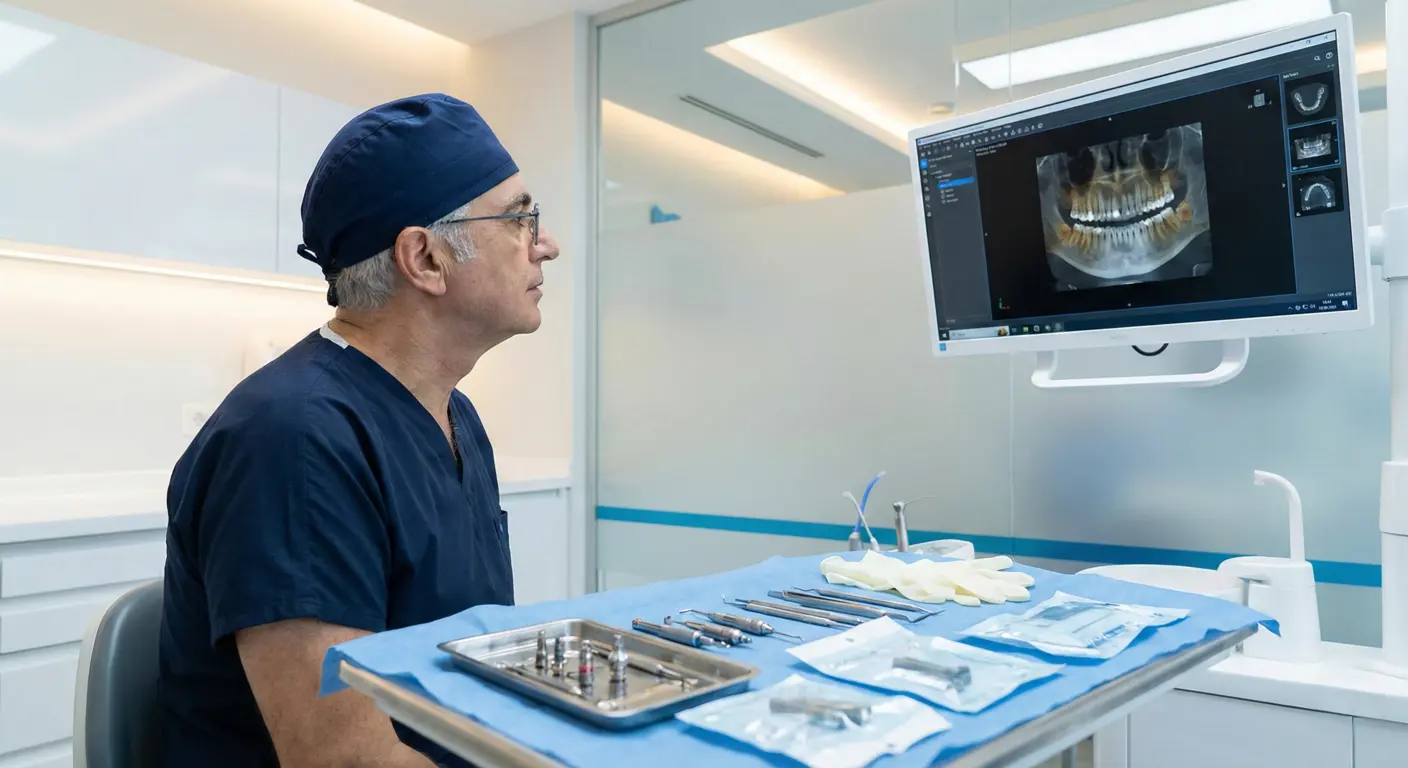
| Advanced Diagnostics | Mandatory CBCT (3D) mapping for every patient. | Planning surgery using only 2D X-rays or photos. |
| Sterilization Control | Certified Class-B Autoclave + tracked indicator strips. | Unverifiable or non-documented sterilization cycles. |
| Traceable Components | Original brand passport with lot/batch numbers. | Vague terms like "European-grade" without a brand name. |
| Biology Respect | Staged 2-Visit Protocol for predictable healing. | "One-day finish" for full-mouth reconstructions. |
1. Why CBCT (3D) Imaging is Mandatory
Specifically, 3D imaging reveals bone density and nerve proximity that standard X-rays miss. Without this, the risk of nerve damage or implant failure increases significantly. Therefore, any dental implants Turkey safety checklist must begin with verified CBCT diagnostics.
2. Material Traceability
Components matter for long-term serviceability. Because global brands (like Straumann® or Nobel Biocare®) have parts available worldwide, your local dentist can maintain your implants if needed. Consequently, always demand written confirmation of the implant system before you travel.
When We Say "NO" (Patient Quality Filter)
We protect our patients by refusing cases where the risk profile is too high. Biology cannot be rushed. Therefore, we may decline treatment for:
- Active Gum Disease: Inflammation must be treated before surgery.
- Uncontrolled Diabetes (HbA1c > 7%): Healing is compromised in these cases.
- Severe Bone Deficit: If bone grafting is required but the patient demands a "quick fix."
Safety FAQ: Straight Clinical Answers
1) Is it safe to fly to Turkey for dental implants?
2) Why do some clinics finish faster than others?
3) What documentation should I receive?
4) Can I get implants if I have a history of smoking?
5) How do you ensure sterilization in the clinic?
6) What is the success rate of dental implants at IST Smile Experts?
7) What should I do if my local dentist warns me against Turkey?
One Step. Clinical Clarity. Then You Decide.
Send your X-ray and medical notes today. I will confirm candidacy and the safest timeline for your case.