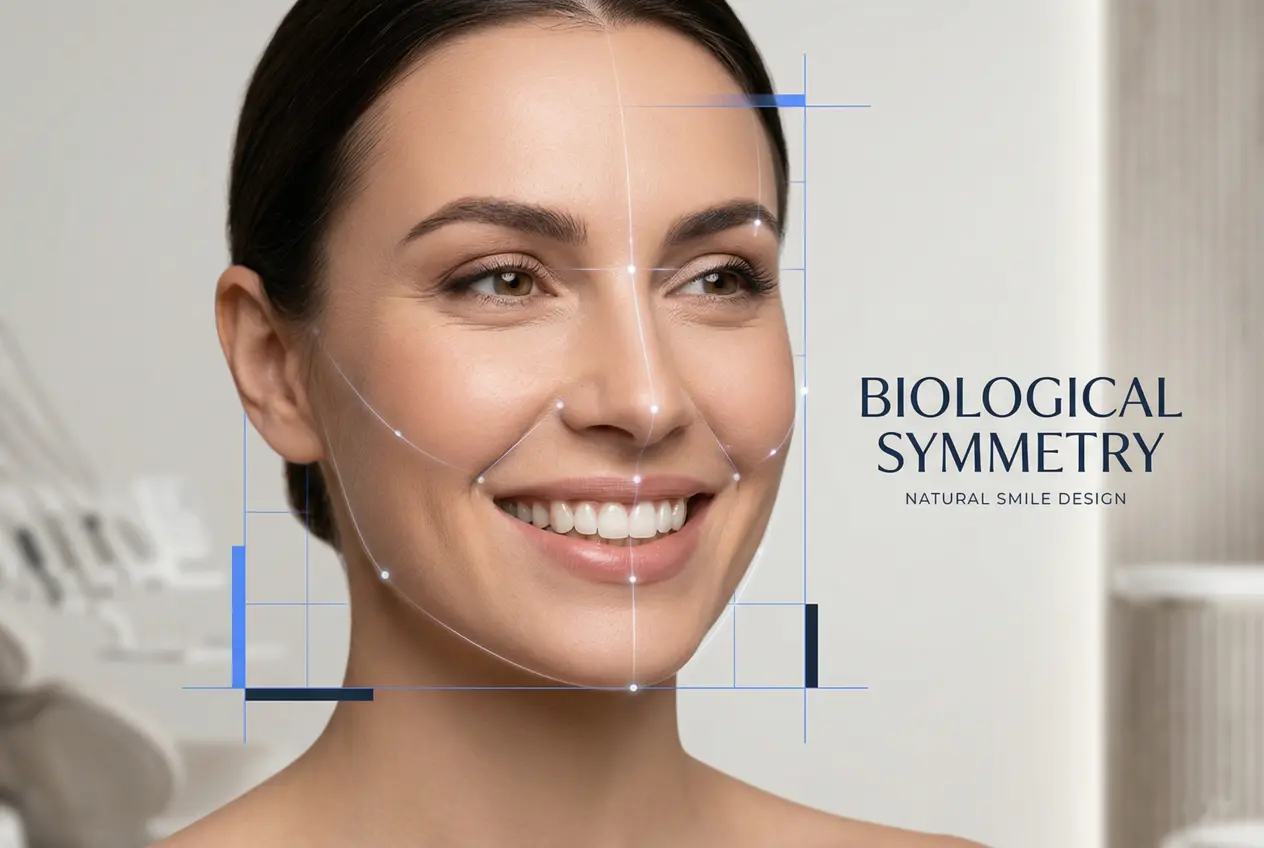
Most patients only realize this when it is already too late
The “perfect white smile” they were promised often ignores the way natural teeth actually behave under light, the way a smile fits the face, and the long-term consequences of overdesigned dentistry.
This explains the difference between artificial-looking results and what we call biological symmetry, a more natural, medically guided approach to smile design based on translucency, anatomy, restraint, and facial harmony.
The Real Problem With “Perfect White Smiles”
Many cosmetic cases still follow a formula that prioritizes brightness over biology. The teeth become whiter, flatter, and more uniform, but less believable. What looks dramatic on social media often fails where it matters most: real life, real light, and real facial movement.
Natural teeth are not identical white blocks. They show depth, translucency, soft transitions, micro-texture, and proportion. When those elements are ignored, the smile may look artificial even if the treatment itself was expensive.
What Is Biological Symmetry?
Biological symmetry is not about making every tooth perfectly identical. It is about creating a smile that looks naturally balanced rather than obviously manufactured. The goal is to respect how teeth relate to the lips, the facial midline, the smile arc, and the patient’s overall expression.
What natural smiles tend to show
- Subtle variation between teeth
- Natural light reflection and translucency
- Harmony with facial midline and lip dynamics
- Proportions that fit the individual, not a template
What often creates a fake look
- Excessive whiteness without depth
- Flat, opaque light behavior
- Uniform repetitive tooth shapes
- A result that draws attention to the treatment itself
The Translucency Factor
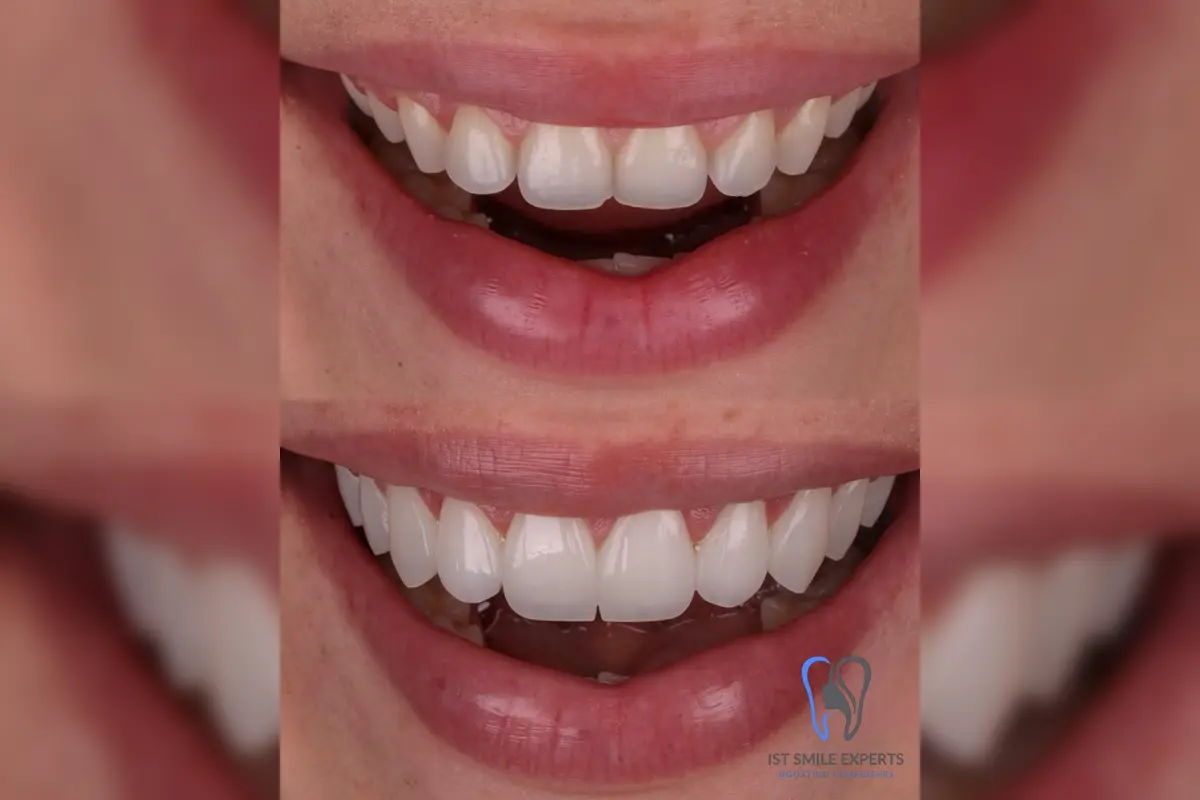
One of the main reasons some veneers look natural and others do not is simple: how they interact with light. Natural enamel is not fully opaque. It reflects and transmits light in a way that creates softness, dimension, and realism, especially near the incisal edge.
When restorations ignore this and focus only on shade, the smile can appear flat, dense, and artificial. This is why material behavior, design philosophy, and execution all matter together.
Why Conservative Planning Matters
Not every case requires aggressive preparation, and not every patient should be pushed into the same cosmetic formula. One of the clearest signs of a medically sound approach is restraint: treating only as much as necessary, preserving healthy structure where possible, and planning around long-term stability rather than quick visual impact.
That is also why treatment decisions should depend on enamel condition, bite, tooth position, and facial context, not trends. For patients comparing options, our price overview helps explain why quality planning, material standards, and technique matter more than headline cost alone.
Who Benefits Most From This Philosophy?
- Patients seeking natural-looking results rather than obvious cosmetic work
- Patients concerned about over-treatment or unnecessary preparation
- Patients who value facial harmony over trend-driven whiteness
- Patients looking for results that remain believable over time
Why Facial Analysis Is Essential
A natural smile is not created by shade selection alone. It depends on the relationship between teeth, lips, facial proportions, smile arc, and movement during speech and expression. This is what separates a smile that simply looks “white” from one that actually belongs to the patient.
For a deeper understanding of treatment pathways, you can also explore:
Brands Serious Patients Often Ask About
High-end dentistry is not only about the final appearance. It is also about what supports the result behind the scenes: material behavior, bonding performance, restorative precision, and the clinical standards guiding each decision.






Frequently Asked Questions
Yes, when designed correctly, natural veneers do not look “done.”
They replicate how real enamel behaves under light, including translucency, subtle texture, and tonal variation. Artificial-looking veneers typically appear flat, overly white, and uniform because they ignore these biological characteristics.
The difference is not just aesthetic: it reflects how the smile integrates with the face as a whole.
Veneers often look artificial when the focus is placed only on color instead of structure.
Common causes include:
- Excessive whiteness without depth
- Uniform shapes applied to every patient
- Lack of translucency
- Poor alignment with facial proportions
A natural result requires balancing light behavior, anatomy, and facial harmony, not simply increasing brightness.
Biological symmetry refers to creating balance that appears natural rather than perfectly identical.
Instead of making every tooth the same, the goal is to design a smile that follows:
- facial midline
- lip movement
- natural tooth anatomy
This approach results in a smile that looks realistic and age-appropriate rather than artificial or overdesigned.
Not always.
The level of preparation depends on multiple clinical factors such as enamel thickness, tooth position, bite, and the desired outcome.
In suitable cases, more conservative approaches can be used to preserve natural tooth structure while still achieving a refined result.
When properly planned and maintained, veneers can last many years.
Longevity depends on:
- case selection
- material quality
- bonding technique
- patient habits
More importantly, a well-designed result tends to remain aesthetically acceptable over time because it is based on natural principles rather than trends.
No. Not every smile needs veneers, and not every case should be approached cosmetically first.
The correct treatment depends on tooth structure, enamel health, bite relationship, and the patient’s actual aesthetic goals. In some cases, a more conservative option, or no veneer treatment at all, may be the better decision.
A natural-looking smile is not defined by whiteness alone.
It is defined by translucency, proportion, anatomy, facial harmony, and the ability of the teeth to look believable in normal light, at rest, and during expression. That is why the best cosmetic result is often the one that looks least artificial.
Before you decide: 2026 patient guides
This is not about making teeth whiter
It is about making them look balanced, believable, and appropriate for the face they belong to.
If you are researching a more natural and medically guided approach, send your current smile photos for an initial review.
Request a Smile Review