
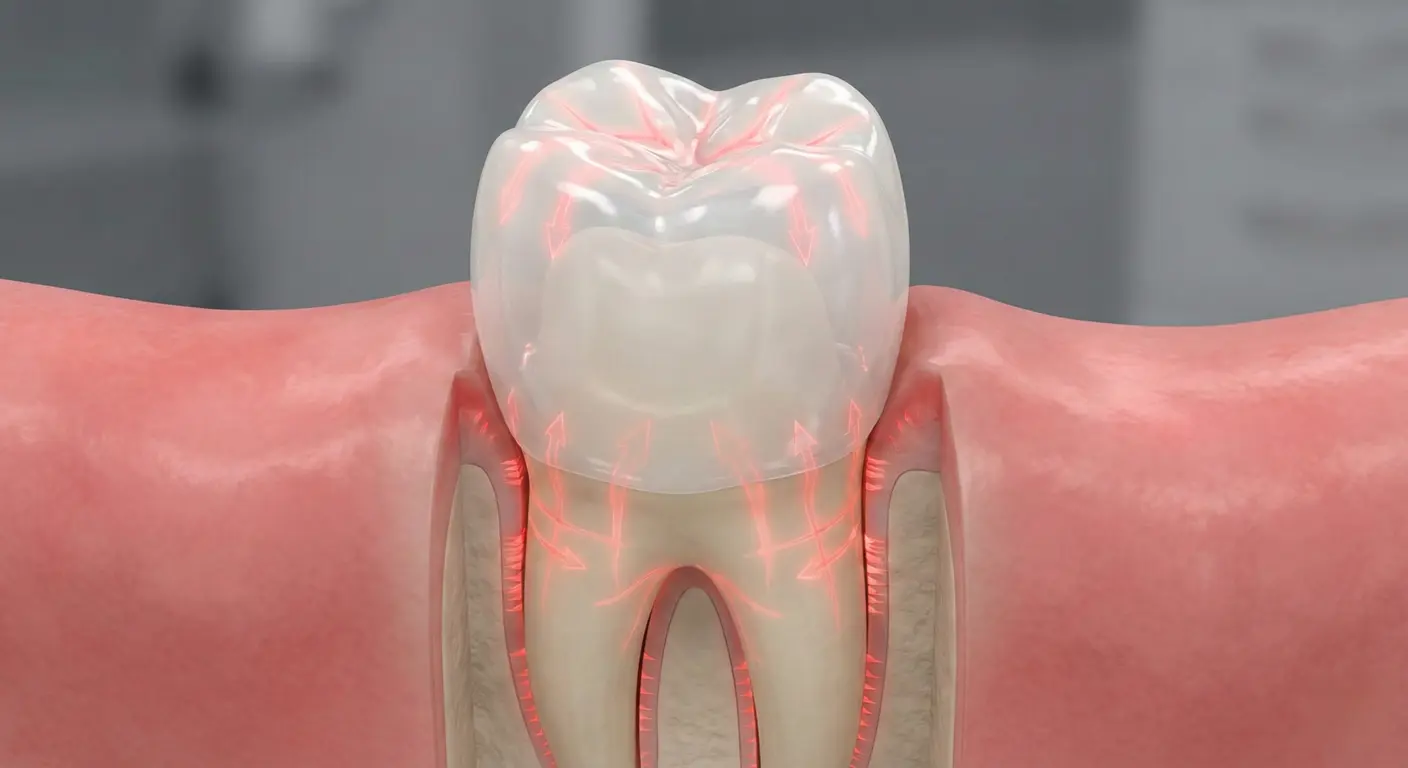
Fast truth: Zirconia crowns can be an excellent option for grinders—especially molars—only when the bite is properly controlled. Most “failed crowns” are actually failed occlusion.
For the full reference (Turkey costs + safety + materials), see: Zirconia Crowns in Turkey .
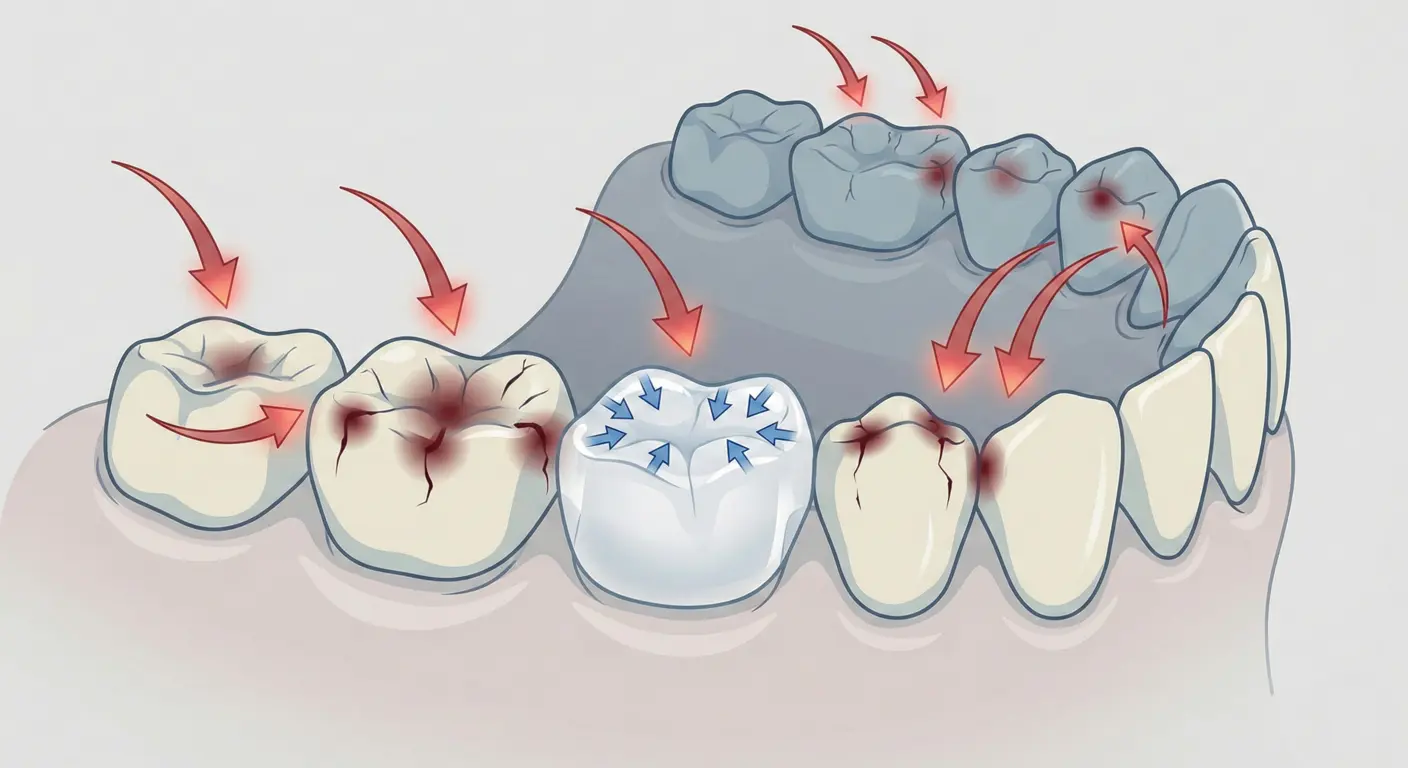
If you grind your teeth, your restoration must survive real bite forces—not marketing claims. This page explains when zirconia crowns are safe for bruxism, what can go wrong, and the exact clinic steps that prevent failures.
✅ Crown makes sense when:
- Root canal treated tooth
- Cracked / heavily restored molar
- Bridge support needed
- Heavy grinding forces on back teeth
❌ Crown is NOT first choice when:
- Healthy, untouched front teeth (cosmetic-only)
- Gum disease not treated yet
- Patient refuses bite control / follow-up
If your goal is cosmetic change with enamel preservation, compare: Emax Veneers in Turkey.
What is bruxism and why it breaks restorations?
Bruxism (teeth grinding/clenching) creates repeated high forces—often during sleep. Over time this can cause enamel wear, cracks, jaw tension, and restoration failure. In grinders, success depends less on “the strongest material” and more on how the bite is engineered.
Are zirconia crowns safe for teeth grinding?
Zirconia is a metal-free ceramic with high fracture resistance. It can be a strong option when:
- The tooth is structurally damaged (cracks/large restorations) or root canal treated.
- Crown thickness and contact points are designed for function (not just cosmetics).
- The dentist performs accurate bite checks and adjusts occlusion carefully.
- A night guard is recommended when grinding is significant.
Bruxism risk-control checklist (what a safe clinic must do)
| Checkpoint | What it means | Why it matters for grinders |
|---|---|---|
| Bite analysis | Evaluate contact points, jaw movement, grinding patterns | Prevents “hot spots” that crack/loosen crowns |
| Digital scanning | 3D scan for accurate fit and margins | Better seal reduces leakage and sensitivity |
| Controlled design | Correct thickness + functional anatomy | Thin crowns and sharp contacts chip faster |
| Fitting & adjustments | Try-in, refine bite, polish | Most “pain after crowns” is bite imbalance |
| Night guard plan | Protect restorations if grinding is significant | Reduces overload and improves longevity |
Zirconia vs other options for bruxism
| Option | Bruxism suitability | Main drawback |
|---|---|---|
| Zirconia crown | Often a strong choice (especially molars) with bite control | Needs precise occlusion to avoid overload |
| Emax veneers | Case-dependent; not ideal for heavy grinders | Higher chipping risk if grinding is severe |
| PFM | Functional strength can be good; aesthetics vary | Potential gum-line discoloration + metal considerations |
| Composite bonding | Not ideal for heavy bruxism | Stains/chips faster; shorter lifespan |
Your 6-Day Treatment Schedule (Typical Roadmap)
- Day 1: VIP pickup + consultation + 3D scan
- Day 2: Free day (enjoy Istanbul)
- Day 3: Free day (enjoy Istanbul)
- Day 4: Fitting & bite adjustments
- Day 5: Final bonding & quality check
- Day 6: Fly home with a protected, stable bite
Want the full cost breakdown? See: 2026 Dental Prices in Turkey.
30-second check: Send 3 photos + (if available) an X-ray. We’ll confirm whether zirconia crowns are necessary—or a more conservative option fits better.
FAQ
Are zirconia crowns good for teeth grinding?
They can be a strong option—especially for molars—but success depends on bite control, correct crown design, and often a night guard if grinding is significant.
Can grinding crack zirconia crowns?
Zirconia is highly fracture-resistant. Issues usually come from uncontrolled high bite contacts, thin design, or poor occlusion adjustments—not the material itself.
Do I need a night guard after crowns?
If your bruxism is moderate-to-severe, a night guard is one of the best ways to protect restorations and reduce overload long-term.
What’s better for bruxism: zirconia crowns or veneers?
For heavy grinders on structurally damaged teeth, crowns may be safer. Veneers may fit cosmetic goals in mild cases. The right choice depends on tooth condition and bite forces.