- IST Smile Experts Clinical Team
- 0 Comments
Written by the IST Smile Experts Clinical Team · Updated · Our clinical & editorial standards
Why Risks Occur (And How We Eliminate Them)
Many patients fear "implant failure" without understanding that most issues originate during the planning stage. Specifically, skipping 3D imaging or forcing a 1-visit timeline on unstable bone creates avoidable hazards. Therefore, our clinical focus is on mitigating risk before a single drill touches the jaw.
| Risk Category | Common Trigger | Clinical Prevention Method |
|---|---|---|
| Anatomical Risk | Nerve or sinus damage due to guesswork. | CBCT (3D) Mapping for precise millimeter clearance. |
| Biological Failure | Infection or lack of bone bonding. | B-Class Sterilization + High-precision titanium brands. |
| Structural Risk | Chipping or loose screws from poor bite. | Occlusion Planning and bite-force analysis. |
| Timeline Risk | Overloading implants before they fuse. | Staged 2-Visit Protocol to respect osseointegration. |
1. Surgical Risks: Nerve and Sinus Protection
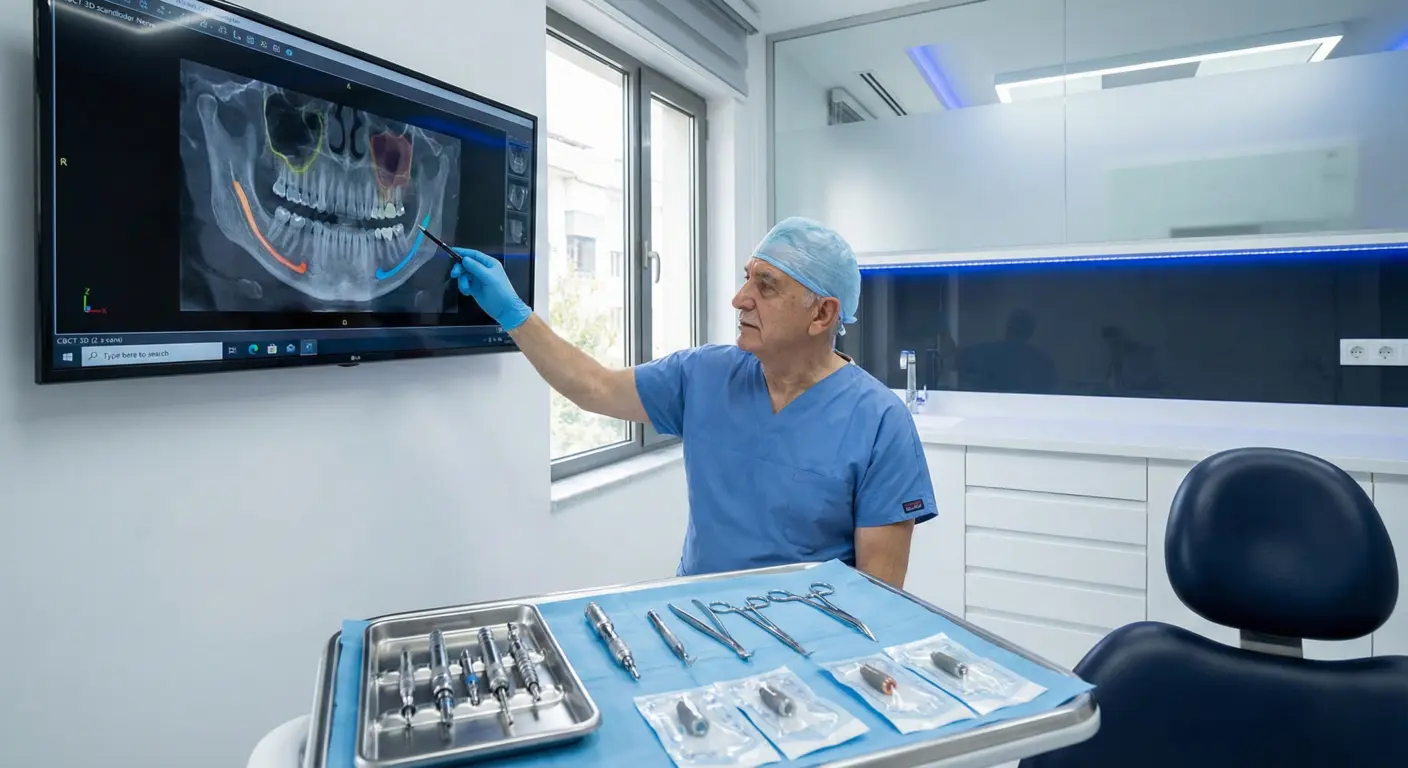
Anatomy varies significantly between patients. Consequently, planning without a 3D scan is high-risk. Specifically, we use CBCT imaging to identify the exact location of the inferior alveolar nerve and maxillary sinuses. Therefore, we ensure the implant foundation is placed safely in available bone without invading critical structures.
2. Biological Risks: Infection Control
Infection is the primary cause of early implant loss. Because we maintain a sterile surgical field using Class-B Autoclaves and single-use kits, the risk of contamination is virtually eliminated. Moreover, we provide a strict medical aftercare protocol to protect the healing site during your first week.
3. Patient Quality Filter: When we say NO
Specifically, we refuse to proceed if risk factors are uncontrolled. This protects your health and the long-term result. We may delay or decline cases involving:
- Uncontrolled Diabetes (HbA1c > 7%): High risk of non-healing.
- Heavy Smoking: Reduces blood flow to bone by up to 300%.
- Active Gum Disease: Infection must be treated before surgery.
FAQ: Understanding and Preventing Complications
1) What is the main cause of dental implant failure?
2) How do you prevent nerve damage during surgery?
3) Is it normal to have pain after the surgery?
4) Can a smoker get dental implants safely?
5) What happens if my body rejects the implant?
6) Does the brand of the implant affect the risk?
7) What should I do if I notice bleeding after I return home?
One Step. Risk Clarity. Then You Decide.
Send your X-ray for an honest risk-assessment from our medical director.